
Last Updated: November 21, 2026
Quick Summary
To organize pet supplies effectively, first sort everything into clear categories such as feeding, walking, play, grooming, and health. Then declutter expired or unused items, store food in airtight containers, and label every bin.
- Sort supplies into five or six core categories before buying any bins.
- Check dates on food and medication and discard anything expired or broken.
- Store dry food in an airtight container with a scoop, away from heat and light.
- Keep food and treats up high or behind a closed door if you have cats or curious dogs.
- Label every container so anyone in the home can put things back in the right place.
Table of Contents
- Sort Every Pet Supply Into Clear Categories
- Declutter, Donate, and Discard Before You Store
- Organizing Dog Food and Treats Safely
- Choose the Right Bins, Baskets, and Containers
- DIY Pet Supply Storage Ideas for Small Spaces
- Building a Dog Supply Storage Cabinet and Organizer Setup
- Setting Up Your Pet Hub and Keeping It Tidy
- Frequently Asked Questions
Sort Every Pet Supply Into Clear Categories
Most homes have pet supplies spread across the kitchen, the hallway, the bathroom, and the car. The fastest way to organize pet supplies starts with one simple step: sort everything into categories before you buy a single bin. Pile up every leash, bowl, bag of food, toy, and grooming tool you own, then group them by what they do.
Start with a short list of core categories. Most households need five or six:
- Feeding: bowls, food, scoops, and food storage containers
- Walking gear: leashes, collars, harnesses, and poop bags
- Play: toys, chews, and balls
- Grooming: brushes, shampoo, nail clippers, and towels
- Health: medications, vet records, and first-aid items
- Clothing and outdoor gear: sweaters, rain coats, and booties
If you have more than one pet, add a column for each animal. A cat's litter supplies and a dog's chew toys should not end up in the same pile. This sorting step also shows you how much you actually own, which matters for the next step.
Once you can see everything, note what gets used daily and what gets used once a year. Daily items belong close to the door or feeding area. Seasonal items can live on a high shelf or in a labeled bin.
Declutter, Donate, and Discard Before You Store
Storage works best when you have less to store. Before buying organizers to organize pet supplies, go through each pile and ask three questions:
- Is it broken, chewed, or past its expiration date?
- Has my pet used it in the last six months?
- Do I have a duplicate that is in better shape?
Throw out anything that fails the first question. Donate toys and beds that are still clean and usable to local shelters or rescue groups. Many shelters accept gently used items, but call ahead to check their needs.
Watch out: expired medications and old food can make pets sick. Check dates on every bag and bottle, and take unused medication to a pharmacy take-back program instead of the trash.
Keep a small "to donate" box near the door. When it fills up, drop it off. This habit stops the clutter from coming back.
Organizing Dog Food and Treats Safely
Food storage is where pet owners make the most avoidable mistakes. Kibble loses its fats and vitamins when exposed to air, heat, and light. Keep dry food in its original bag inside an airtight container, and store that container in a cool, dry place away from the stove or a sunny window.
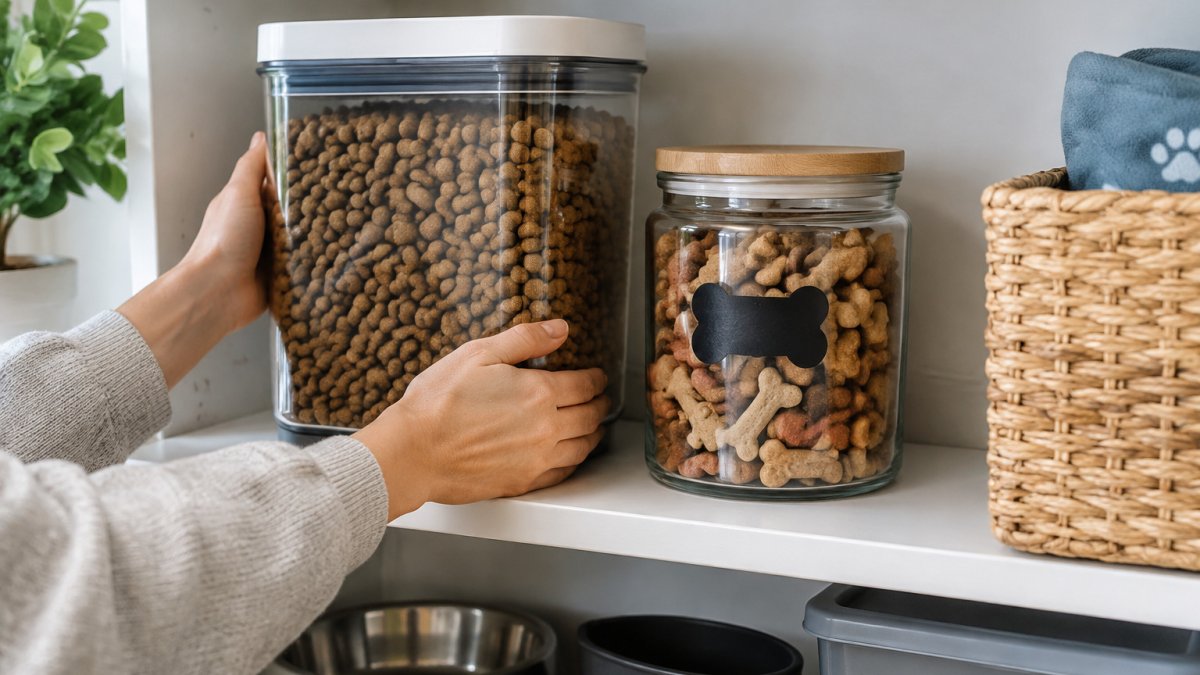
Follow these basic rules:
- Keep food in a container with a tight seal and a scoop inside
- Write the purchase date on the container with a marker or label
- Use older bags first so nothing sits too long
- Wipe the container out before refilling it so old oil does not build up
Treats need the same care. Soft treats can mold quickly, so store them in a sealed jar away from moisture. Keep treat storage separate from human food to avoid mix-ups. Store any food you have opened in a sealed container, and check the label for how long it stays fresh once opened.
Plan your food inventory the way you plan groceries. Track how fast you go through a bag, and reorder before you run out. A simple note on your phone works well.
Watch out: store food up high or behind a closed door if you have cats or curious dogs. Many pet poisonings happen when animals reach food and treats left on the counter.
Choose the Right Bins, Baskets, and Containers
The right container makes the system easy to keep up. Pick containers based on what they hold and where they sit.
Here is a quick guide:
| Item type | Best container | Why it works |
|---|---|---|
| Dry food | Airtight bin with a lid and scoop | Keeps out air and pests |
| Toys | Open basket or fabric bin | Easy to grab and put away |
| Leashes and collars | Wall hooks or a hanging organizer | Keeps them visible near the door |
| Grooming tools | Shallow drawer organizer | Prevents loose brushes from getting lost |
| Medications | Lidded box on a high shelf | Out of reach and easy to find |
Choose clear bins when you need to see what is inside. Choose opaque bins for food or medication, which should be kept away from light. Label every container, even if it seems obvious. Labels help other people in your home put things back in the right place.
Pick sizes that fit your space. A bin that is too big becomes a dumping ground. A bin that is too small forces you to stuff items in and leave the lid open.
DIY Pet Supply Storage Ideas for Small Spaces
Small-space pet storage fails for two reasons: the solutions are too permanent for renters, or they collapse under the weight of a full food bin. The fixes below are renter-friendly, load-aware, and sized for apartments, shared rooms, and closets that already hold something else.
Start by measuring before you buy. Three numbers matter: the width of your door frame (for over-the-door racks), the height under your bed or sofa (for rolling bins), and the depth of your closet shelf (for stackable containers).
Try these renter-safe setups:
- Over-the-door organizer with reinforced hooks: Hang leashes, treat pouches, and small toys on the back of a closet or entry door. Choose one with metal hooks rather than plastic, because a full treat bag plus a retractable leash can pull plastic hooks out of the fabric over time.
- Tension-rod shelf inside a cabinet: Install a tension rod between the sides of a cabinet to create a second tier for bowls, grooming bottles, or folded towels. This works in rental kitchens because it leaves no holes, but check that the rod is rated for the weight, a shelf holding full shampoo bottles needs a stronger rod than one holding brushes.
- Stackable bins under the bed: Use low-profile bins with lids for seasonal items like sweaters, rain coats, and extra toys. Measure the clearance first; most under-bed bins are 6 to 8 inches tall, and a bed skirt or frame rail can cut that down.
- Rolling cart with locking casters: Keep food, bowls, and grooming supplies together and roll the cart into a closet when guests come over. Locking casters matter if you have a dog that leans on the cart or a cat that jumps on it.
- Wall-mounted hooks with removable adhesive: Use adhesive hooks for light items like poop bag dispensers and small leashes. Adhesive hooks have weight limits printed on the package, and most hold only a few pounds, do not hang a full walking bag or a heavy harness on one.
Renters should avoid drilling into walls or cabinet sides unless the lease allows it. Command-style adhesive hooks, tension rods, and freestanding shelving units cover most needs without damage.
Keep the most-used supplies at eye level so you do not have to dig. Store less-used items higher or lower.
Watch out: over-the-door organizers and tension rods can fail suddenly if they are overloaded, and a falling food bin is a hazard for pets and people.
Building a Dog Supply Storage Cabinet and Organizer Setup
A dedicated cabinet can hold most of what a dog owner needs in one place. Readers who want sturdy bags for collecting and storing waste can browse Trail Trash Bag options for this setup. Choose a cabinet with doors so the contents stay hidden, and add shelves to make use of the height.
Set it up in this order:
- Place the cabinet near where you feed or walk your dog.
- Put food and treats on the bottom shelf, since these are heavy.
- Put bowls, mats, and feeding tools on the next shelf up.
- Keep leashes, collars, and poop bags on hooks inside the door.
- Store grooming supplies and first-aid items on the top shelf, out of reach.
Add a small whiteboard or notepad inside the cabinet door. Use it to track food levels, vet appointments, and when you last restocked poop bags. This keeps the setup working over time, not just on the day you build it.
Setting Up Your Pet Hub and Keeping It Tidy
A pet hub works best when it is built for the number of animals you actually have, not the one pet most organizing guides assume. In a multi-pet or multi-species home, the hub's job is not just storage, it is separation.
Set up the hub in zones, one per animal plus one shared zone:
- Shared zone: leashes, poop bags, towels, and first-aid items used for every pet
- Per-pet zone: food, treats, medications, and grooming tools labeled with the animal's name
- Quarantine zone: a small lidded box for items that are chewed, soiled, or awaiting donation
Label every per-pet container with the animal's name and, if relevant, the food or medication inside.
Medications need their own system. Keep each pet's medication in a separate labeled box on a high shelf, with the prescription label facing up and the expiration date visible.
Food and treats should be separated by species and by diet. If one dog eats a prescription diet and another eats regular kibble, store them in different containers with different scoops.
Rotate toys to keep pets interested, but rotate per pet. Put half of each animal's toys away in a closed bin and swap them out every two weeks.
Keep the hub tidy with a short routine:
- Weekly: wipe down bowls, check food and medication dates, toss broken toys, and restock poop bags and treats.
- Monthly: wash toy baskets and food containers with hot soapy water, check that labels are still legible, and review the quarantine box for donation items.
- Seasonally: rotate seasonal gear like sweaters and cooling mats, and check that the hub still fits your pets' current sizes and diets.
Watch out: in multi-pet homes, the biggest risk is not clutter but cross-contamination, a dog eating cat food, a cat getting into a dog's medication, or a pet with allergies sharing a toy bin.
Frequently Asked Questions
What are some effective ways to organize pet supplies?
Start by sorting everything into categories such as food, toys, grooming, walking gear and medications. Assign each category its own bin or shelf, and place items where they are used: leashes near the door, bowls near the feeding spot, grooming tools in a bathroom drawer. Label every container so anyone in the household can put things back correctly. Review the setup every few months, since supplies change as pets grow or diets change, and remove anything expired or unused.
Is it better to keep dry dog food in the original bag or in a container?
Transfer dry dog food into an airtight container with a tight-fitting lid. Original bags are often only folded or clipped shut, so air, moisture and pests can get in and the kibble can go stale. Choose a food-safe container sized so the bag fits inside, and keep the original bag's batch information and best-before date by taping the bag or noting the date on the container. Store it in a cool, dry place away from direct sunlight and heat sources.
How can I organize leashes, collars, and walking gear?
Keep leashes, collars, harnesses and poop bags together on hooks or a wall-mounted rack near the exit you use most. Hang each dog's gear on its own hook so nothing gets mixed up on busy mornings. A small basket or bin on the floor under the hooks can hold treats and bags. Check the gear every few weeks for worn clips and frayed straps, and replace anything that is no longer safe.
How can I organize pet supplies in a small home?
In a small space, go vertical and use every surface you can. Wall-mounted shelves, over-the-door organizers and a rolling cart can hold food, toys and grooming items without taking up floor space. Choose one closet, cabinet or corner as the pet hub rather than spreading supplies across several rooms. Rotate toys so only a few are out at a time, and store seasonal items such as winter coats or cooling mats in labeled bins under a bed or on a high shelf.
