
Table of Contents
- Start With a Plan: Define Your Minimalist Home Goals
- How to Declutter Your Home Without Getting Overwhelmed
- Minimalist Home Essentials: What Actually Earns a Place
- Choose Functional Furniture and Smart Storage
- Build a Cozy Minimalist Home That Still Feels Warm
- A Minimalist Home on a Budget: Where to Spend and Save
- Keep It Going: Daily and Weekly Routines That Maintain the Look
- Frequently Asked Questions
Last Updated: October 20, 2026
Start With a Plan: Define Your Minimalist Home Goals
Building a minimalist home starts with a decision about what you want your space to do for you, not a shopping list. At Dust and Iron, we think of minimalism as a filter rather than a look: every object earns its place by being useful, comfortable, or genuinely loved. Before you touch a single drawer, write down three goals for how you want to live. Fewer things to clean? A calmer room to work in? Space for the dog to stretch out? Those answers decide what stays and what goes. A minimalist home is a working home, not an empty showroom, and the plan should reflect the life you actually live in it.
Pick a Room Order and Set a Realistic Timeline
Choose one room to start with, ideally the one that irritates you most, and give yourself a realistic window: a weekend per room is common, a full month for a cluttered garage. Work in this order:
- Bedroom first, because sleep quality improves fastest when visual clutter drops
- Living room second, since it sets the tone for the whole house
- Kitchen third, where duplicate items pile up fastest
- Entryway and storage areas last, once you know what you're keeping
A common mistake is starting in the room with the most sentimental items. You'll stall there. Start where progress is visible.
A Room-by-Room Implementation Plan
Kitchen. Empty one cabinet at a time onto the counter.
Bedroom. Strip the room to the bed, one bedside surface, and one storage piece.
Bathroom. Treat the counter as a display surface, not storage. Keep daily toiletries in one tray or drawer insert, and move backups and infrequently used products into a single labeled bin.
Living area. Start with the largest surfaces, sofa, coffee table, media unit, and clear them completely. Return only items used weekly. Cables, remotes, and chargers go into one closed container.
Entryway. This is the clutter bottleneck of most homes. Give every item a landing spot: one hook per person, one shoe pair per person on a rack, one tray for keys and mail.
Set a Timeline You Can Actually Keep
A realistic pace is one room per weekend for main living spaces and one month for garages, attics, or storage rooms. Block two 30-minute sessions per room rather than one long marathon: the first pass removes obvious excess, the second handles the harder decisions. Schedule the donation drop-off the same week you declutter, or boxes will sit in the hallway for months. If you share the home, agree on the room order together so no one feels their space is being cleared without them.
How to Declutter Your Home Without Getting Overwhelmed
Decluttering is the act of removing unneeded items from a space so that only frequently used and genuinely valued belongings remain. The trick is to declutter in short, decisive passes rather than long, emotional sorting sessions. Set a timer for 30 minutes, pick one zone (a shelf, a drawer, a corner), and make a keep, donate, or discard decision on every item without leaving the room. Zero Waste Home's decluttering guidance is a useful reference for deciding what to donate versus recycle.
Sort, Donate, and Discard in One Pass
Keep one box for donations, one bag for recycling, and one bin for actual rubbish. Anything you haven't used in a year and can't name a specific future use for goes in the donation box. Duplicate items are the easiest win: the third pair of scissors, the spare phone cables, the extra mixing bowls. Donate usable goods to a local charity shop and check EPA guidance on reducing household waste for responsible disposal of electronics and hazardous items.
Minimalist Home Essentials: What Actually Earns a Place
Minimalist home essentials are the items you reach for daily: a bed, seating, a table, lighting, basic cookware, towels, and storage that works. Everything else is optional. The test is simple: if you had to carry it out of the house and back in, would you bother? Most people discover their kitchen holds three times the cookware they use and their wardrobe holds clothes for a version of themselves that no longer exists. Keep the comfortable, functional pieces and let the rest go. A few good items beat a house full of almost-right ones.
| Category | Keep | Let Go |
|---|---|---|
| Kitchen | One good knife, daily pans, plates you use | Duplicate gadgets, mismatched extras |
| Wardrobe | Comfortable daily pieces, one smart outfit | Clothes that don't fit or never get worn |
| Living room | Seating, one throw, a lamp | Ornament clutter, unused media |
| Pet gear | Bed, bowls, one favourite toy | Broken toys, duplicate leads |
Choose Functional Furniture and Smart Storage
Functional furniture is the backbone of a minimalist home: pieces that do a job and hide the mess. Choose furniture with built-in storage where it makes sense, like a bed with drawers or an ottoman that holds blankets. End tables with a shelf or a closed drawer do more work than a bare side table. Strategic storage matters more than sheer volume, because visible clutter is what makes a room feel chaotic. Baskets, boxes, and lidded containers let you organize by type or use without turning your shelves into a display of stuff. For cable management, a roll of Transparent Double-Sided Nano Tape keeps cords tidy along a desk edge or skirting board without drilling holes.

Build a Cozy Minimalist Home That Still Feels Warm
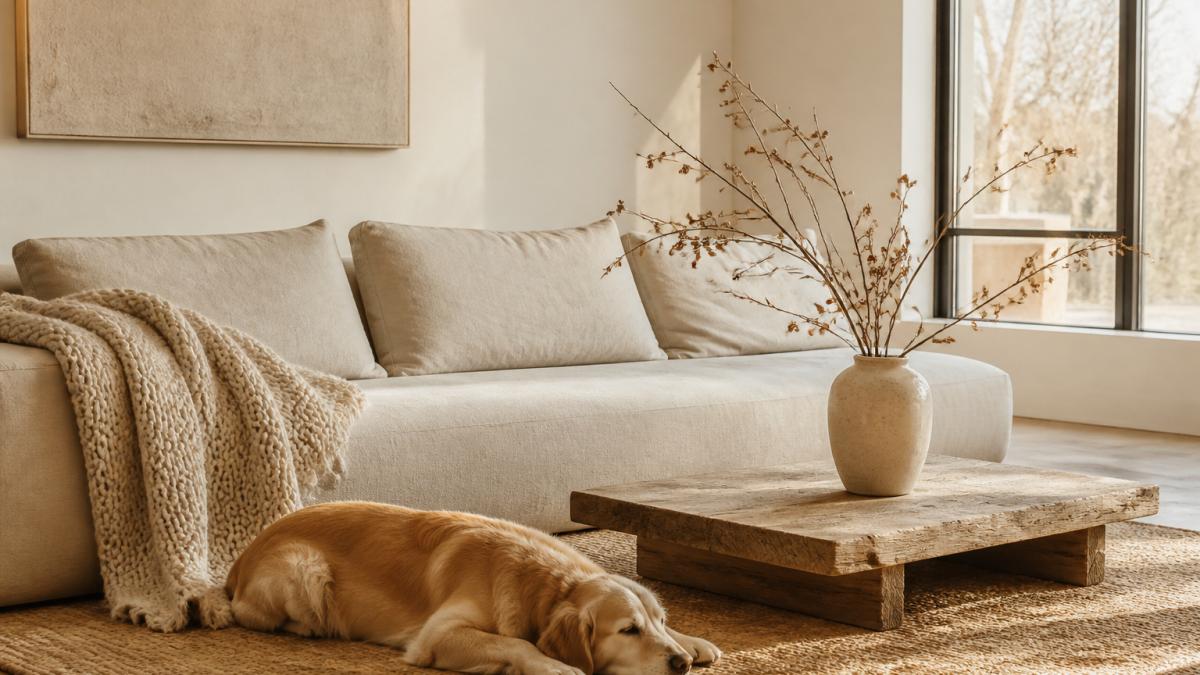
A cozy minimalist home is one where simplicity doesn't tip into coldness. The fix is texture, not more objects. Layer natural materials like linen, wool, wood, and rattan; add a chunky knit throw, a woven rug, and one or two cushions in a warm color. Natural light does more for warmth than any decor, so keep windows clear and use a mirror to bounce daylight into darker corners. Intentional decor means fewer pieces chosen well: a single ceramic vase, a vintage find, a framed print.
Air Purifier →
A Minimalist Home on a Budget: Where to Spend and Save
A minimalist home on a budget is entirely achievable because minimalism rewards buying less. The trap is treating minimalism as a new aesthetic to purchase. Instead, sort every potential purchase into one of four buckets: keep, buy, reuse, or postpone. That single habit does more for your budget than any sale.
The Four-Bucket Rule
Keep. Most of what a minimalist room needs, you already own. Before buying anything, walk through the house and pull the best version of each item you need, the good lamp from the spare room, the sturdy basket from the garage, the wool throw from the closet.
Buy. Reserve spending for items you touch daily and that affect comfort or health: a supportive mattress, a comfortable sofa, task lighting, a decent knife.
Reuse. Secondhand and inherited pieces do the heavy lifting in most budget minimalist homes.
Postpone. Anything decorative, seasonal, or "someday" goes on a postpone list. Live with the cleared space for at least two weeks before buying. Most postpone-list items never get purchased, which is the point.
Realistic Ranges and Trade-Offs
Exact prices vary by region and condition, so treat these as planning ranges rather than quotes. A secondhand solid-wood dining table typically costs a fraction of a new equivalent; a new budget table may be cheaper upfront but often needs replacing sooner. Storage containers are a common overspend: matching lidded boxes look tidy but cost more than clear stackable bins that do the same job, and opaque boxes hide clutter rather than reducing it. Lighting is worth prioritizing over decor, since a single good floor lamp changes a room more than a shelf of accessories. For textiles, one wool or cotton throw bought secondhand usually outlasts three synthetic ones.
Avoid the "Minimalist Aesthetic" Trap
The biggest budget mistake is replacing everything at once to chase a look. You'll spend more and end up with items you didn't need. Declutter first, live with the space, then buy only what's missing. A plug-in Air Purifier is a practical budget addition for pet owners, since it tackles odors and allergens without adding visual clutter to a room, but only buy it after you've cleared the space, not as part of a shopping spree.

Keep It Going: Daily and Weekly Routines That Maintain the Look
Maintaining a minimalist home comes down to small habits, not big clean-outs. Clear surfaces are the visible signal that the system is working, so treat an empty tabletop as a habit, not an accident. Mind's guide to decluttering for wellbeing notes that a calmer space can support calmer routines, which is the real payoff here.
| Routine | Time | What It Covers |
|---|---|---|
| Daily reset | 10 minutes | Surfaces, dishes, pet gear, mail |
| Weekly tidy | 30 minutes | One room deep-tidy, donation bag |
| Monthly check | 1 hour | Duplicates, storage audit, cords |
| Seasonal review | Half a day | Wardrobe, seasonal decor, repairs |
Building a minimalist home is a challenge that rewards patience, and it's easier when the pieces you keep are comfortable and practical. At Dust and Iron, we stock home essentials, cozy apparel, and pet supplies designed to fit a simpler way of living, from a plug-in air purifier that handles pet odors to a HY300 Pro Projector Home Theater for movie nights without a media wall.

Frequently Asked Questions
How do I start creating a minimalist home?
Start with one room, not the whole house. Pick the space you use most, clear every surface, and sort items into keep, donate, and discard piles. Set a 20-minute timer so the task stays manageable. Once that room feels calm, move to the next. A written room order and a target date for each keeps momentum going, and you avoid the burnout that comes from trying to overhaul everything in one weekend.
How can I make a minimalist home feel cozy?
Warmth comes from texture and light, not from volume. Layer a chunky throw, a woven rug, and natural materials like wood and linen. Use soft lamps instead of overhead lighting, and add one or two personal items such as framed photos or a plant. A cozy minimalist home keeps surfaces clear but never feels cold, so pick pieces you actually touch and use every day rather than decorative filler.
What should you keep in a minimalist home?
Keep what you use regularly and what you genuinely love. A practical test is the 30/30 rule: if you have not used an item in 30 days, consider whether you would replace it if you lost it. Kitchen tools, everyday clothing, pet gear, and comfort items stay. Duplicates, broken items, and things kept only out of guilt go. The goal is a home where every object has a job or brings you real comfort.
How do you maintain a minimalist home long term?
Build small routines instead of relying on willpower. A five-minute daily reset where surfaces get cleared and items go back to their spots prevents most clutter from returning. Once a week, do a ten-minute sweep of the busiest room. Use the one-in, one-out rule for new purchases: if something comes in, something leaves. These habits take less time than a monthly deep clean and keep the space stable.
Can you build a minimalist home on a budget?
Yes, and it often costs less than a cluttered setup. Decluttering is free, and selling or donating items can fund a few key purchases. Spend on functional furniture and storage that solves a real problem, and save on decor by using what you already own. A minimalist home on a budget prioritizes clear surfaces and practical layout over new purchases, so you buy less overall.