
Last Updated: November 19, 2026
Quick Summary
Shopping at smaller retailers keeps more of your money in your community, since local spending pays nearby staff, suppliers and taxes. Smaller shops also offer knowledgeable service and curated ranges, though they are not always the cheapest or fastest option.
- Money spent at local independent businesses recirculates through wages, supplier payments and local taxes.
- The local multiplier effect is stronger in towns with a dense mix of independent shops.
- Smaller retailers often offer staff who know the stock and can advise before you buy.
- Big box stores often undercut small retailers on commodity goods and deliver faster.
- Ask a smaller retailer about its return policy before buying, especially for higher-ticket items.
Table of Contents
- Why Smaller Retailers Keep More Money in Your Community
- Small Business vs Big Box Store Comparison: Where Each One Wins
- Curation, Quality and Inventory: Why Fewer Choices Can Mean Better Ones
- Personal Service and the Convenience Paradox
- Slow Shopping and the Digital Side of Small Retail
- The Honest Downsides: Price, Selection and Speed
- Choosing Where to Spend Your Next Dollar
- Frequently Asked Questions
Why Smaller Retailers Keep More Money in Your Community
Smaller retailers keep more of your money where you live.
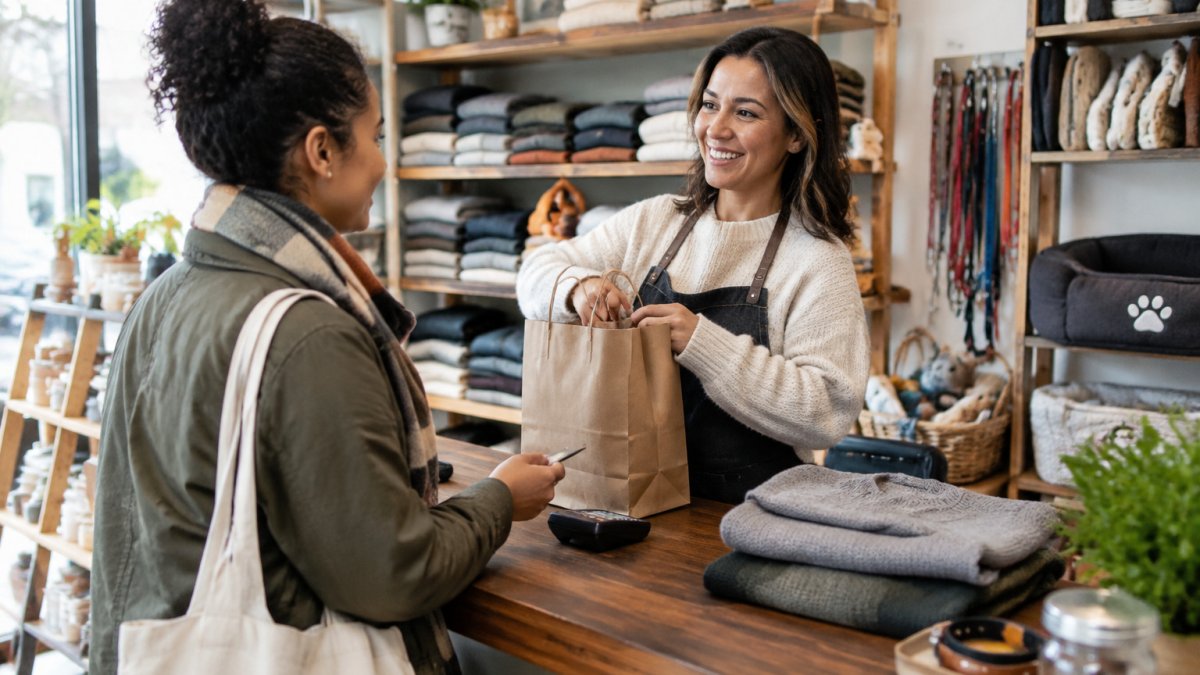
That money does more than sit in a local bank account. It pays local staff, supplies nearby vendors, and returns to the tax base that funds the roads and schools you use. Shoppers who choose a smaller retailer are, in effect, choosing where their dollars circulate next.
What the local multiplier effect actually means
The local multiplier effect describes how each dollar spent locally gets re-spent locally, again and again. A shop owner pays a neighboring accountant, who buys lunch from a nearby café, which pays its own suppliers in turn. Each round keeps more value inside the community than a purchase at a national chain, where profits often flow to headquarters in another state.
The effect is real, but its size depends on how many local links exist in a given town. A town with few independent businesses gets a smaller multiplier than one with a dense mix of shops.
Small Business vs Big Box Store Comparison: Where Each One Wins
Big box stores and smaller retailers are built to win on different dimensions, and understanding the mechanics of each helps you decide where to spend on any given purchase. The comparison is not about which model is better in the abstract; it is about which trade-offs match the item in front of you.
Price and purchasing power
Big box chains buy in enormous volume and negotiate supplier terms that independent shops cannot match. On identical commodity goods, a national chain can often undercut a small retailer by a meaningful margin. That advantage is real, but it narrows on items where the small retailer buys directly from makers or carries house-selected ranges that are not sold elsewhere. A common pattern is that the price gap is widest on branded staples and narrowest on curated or locally sourced goods.
Selection and inventory depth
A big box store wins on breadth: it stocks thousands of SKUs so you can finish a full shopping list in one trip. A smaller retailer wins on depth within a narrow range. The shelf space is limited, so each product has to justify its place, which tends to produce a tighter, more intentional assortment. The trade-off is that you may need to visit more than one shop to complete a list, while the big box trip is a single stop.
Service and product knowledge
This is where the gap is widest. In a big box store, staff are often stretched across departments and may not know the specifics of a given product. In a smaller retailer, the owner or a long-tenured employee usually knows the stock intimately and can explain the difference between two similar items, recommend a size, or flag a return risk before you buy. For considered purchases such as gifts, clothing, or anything where fit and advice matter, that knowledge frequently outweighs the price difference.
Returns and after-sale friction
Big box return policies are usually standardized and generous, which is a genuine advantage. Smaller retailers vary more: some offer flexible returns, others are stricter because their margins are thinner. The practical move is to ask about the return policy before you buy, especially on higher-ticket items. A small retailer that explains its policy up front is usually signaling how it handles problems after the sale.
Community and economic retention
This is the dimension competitors cover most often, and it is worth restating with the mechanism. Money spent at a local independent business tends to recirculate locally through wages, supplier payments, and local taxes, while a larger share of spending at a national chain flows to headquarters and distant suppliers. The size of that effect depends on how many local links exist in a given town, but the direction is consistent: local spending keeps more value close to home.
Speed and convenience
A large online marketplace or big box store usually wins on delivery speed and one-stop convenience. A smaller retailer that packs orders by hand may be slower, though many now offer local pickup or same-day delivery within their area. If speed is the deciding factor, the big box is often the faster answer; if advice and local impact matter more, the smaller retailer earns the purchase.
A practical way to decide
A simple rule of thumb: for commodity items you need today and know exactly what you want, the big box store is usually the efficient choice. For considered purchases, gifts, or anything where advice and local impact matter, a smaller retailer usually earns the purchase. Neither model wins across the board, and the honest answer is that most households use both.
The article weighs big box stores against smaller retailers across several dimensions, summarised below.
| Dimension | Big box store | Smaller retailer |
|---|---|---|
| Price | Often undercuts on commodity goods | Gap narrows on curated or locally sourced goods |
| Selection | Breadth: thousands of SKUs in one trip | Depth within a narrow, intentional range |
| Service | Staff stretched across departments | Owner or long-tenured staff know the stock |
| Returns | Standardized, generous policies | Varies; ask before buying |
| Community impact | Profits often flow to headquarters | Spending recirculates through local wages and taxes |
| Speed | Usually wins on delivery and one-stop convenience | May be slower; some offer local pickup or same-day delivery |
Curation, Quality and Inventory: Why Fewer Choices Can Mean Better Ones
A smaller retailer carries fewer items, and that limit works in the shopper's favor. Each product has to earn its place on a shelf that cannot hold everything. The result is a tighter, more intentional range that is easier to browse than an endless grid of near-identical options.
Our range covers clothing, home essentials and pet supplies, selected to be comfortable and practical.
Personal Service and the Convenience Paradox
The convenience paradox is the tension between the ease of buying anything online and the frustration of finding nobody to answer a question. A large catalog saves time when you know exactly what you want. It costs time when you are unsure, because nobody is there to explain the difference between two similar products.
An owner who knows the stock can recommend the right size or suggest an alternative without a scripted reply. If you want to see the range first, you can start on our browse our current featured range page.
Slow Shopping and the Digital Side of Small Retail
Two shifts are reshaping how people shop at smaller retailers: a deliberate move toward slower, more intentional buying, and the digital transformation that lets independent shops compete beyond their storefront. Neither is well covered by the current top-ranking articles, and together they explain why shopping small is more practical today than the old convenience-versus-community trade-off suggests.
What slow shopping actually is
Slow shopping means browsing with intent rather than in a rush: comparing a few options, asking questions, and buying something you expect to keep rather than something you clicked on in seconds. The appeal is partly psychological. A common pattern among shoppers who adopt it is that a more deliberate pace reduces the regret that comes from impulse purchases and the returns that follow. The research on this is still developing, so treat the satisfaction benefit as a reasonable expectation rather than a proven effect, but the mechanism is intuitive: more attention before the purchase tends to mean fewer surprises after it.
There is also a community dimension. Shopping in person at a smaller retailer puts you in a space where the owner recognizes you and where conversation is part of the transaction. For people who spend most of their working day online, that in-person contact is a genuine counterweight to the isolation of algorithmic shopping, where recommendations arrive without any human context.
The convenience paradox, and how to work around it
The convenience paradox is the tension between the ease of buying anything online and the friction of shopping small: limited hours, narrower inventory, and the need to visit in person. The honest response is not to pretend the friction does not exist but to plan around it. A few practical habits close most of the gap:
- Check stock before you go. Many smaller retailers publish current inventory or respond to a quick message, which saves a wasted trip.
Watch out: assuming a small retailer's website reflects real-time stock can lead to disappointment, since many independent shops update inventory manually and lag behind actual shelf counts.
How small retailers are going digital
The digital side of small retail has changed the old trade-off. Many independent shops now run their own websites and sell through social channels. Our team shares updates about new arrivals and how we work on our latest news and updates page, so you can see how a small retailer communicates before you buy.
The practical upshot is that the choice is no longer local versus digital. A shopper can browse a small retailer's range online, ask a question directly, and then decide whether to visit, order for pickup, or have the item shipped. That hybrid path captures most of the convenience of online shopping while keeping the advice and local impact that make smaller retailers worth the effort.
The Honest Downsides: Price, Selection and Speed
Smaller retailers are not always the cheapest option. Big chains buy in volume and can undercut independent prices on identical goods. A smaller retailer also carries a narrower range, so you may need to visit several shops or order from more than one source to finish a shopping list.
Delivery speed can differ too. A large online marketplace may ship faster than a small business that packs orders by hand. These trade-offs are real, and a smaller retailer should be honest about them rather than pretend otherwise.
Choosing Where to Spend Your Next Dollar
The question is not whether smaller retailers are always better. It is whether the trade-offs suit what you need. If local economic impact, considered products and personal advice matter to you, a smaller retailer is worth the effort. If you need the lowest price and fastest delivery on a standard item, a larger store may serve you better.
For the purchases where a smaller retailer makes sense, contact us directly with any question before you order. We would rather answer a question up front than have you guess.
Watch out: Check a retailer's returns policy before you buy a fitted or made-to-measure item, since personal service does not always extend to returns.
Frequently Asked Questions
What are some reasons to shop at small businesses?
Small businesses keep more of each dollar local. Shoppers also tend to get more personal help, a more carefully chosen inventory and a shopping experience that is easier to enjoy at a slower pace. The benefits are strongest when you already know the owner or can see where your money goes.
What are the advantages and disadvantages of small firms?
Smaller retailers often have weaker commodity purchasing power, which can mean higher prices on identical goods, and a narrower selection. Big-box stores usually win on price, breadth and convenience. A smaller retailer is often the better pick when service, curation or local impact matter more to you.
Does supporting small businesses help local community development?
Yes, in measurable ways. Local retailers tend to recirculate revenue through local suppliers, staff and services. Pricing and availability vary by store, so check current prices directly with the retailer you are considering.
